
What Makes a Moral Judgment More Than a Feeling? Kant’s Question Returns
A judgment about right and wrong asks more of us than a report of what we happen to want.
The University of Amsterdam’s October 22–23 Kant conference provides a timely starting point for a lasting question: how can we know what we ought to do, and what must be true about us for moral responsibility to make sense?
The published conference announcement names moral knowledge, values and practical judgments among its subjects. Organized by Thomas Nys and Tijn Smits, it lists keynote speakers Andrew Chignell, Anja Jauernig, Patrick Kain and Jessica Tizzard. Those details establish the research agenda; they do not tell us what conclusions participants reached. This article explores the underlying questions rather than reporting unverified proceedings.
A preference and a reason are different starting points
Imagine promising to help someone and later discovering a more enjoyable way to spend the afternoon. Your preference may have changed, but the other person can still ask why your promise should count for less. The disagreement immediately reaches beyond a description of your mood. It concerns whether there is a reason you ought to recognize even when it becomes inconvenient.
In Kant’s moral philosophy, the foundation of obligation cannot simply be whatever produces the most satisfaction. The Stanford Encyclopedia of Philosophy’s account explains his effort to identify principles grounded in reason, including the idea of autonomy: a will that can recognize and act on a law rather than merely follow an external pressure or passing inclination.
Autonomy, in this setting, is more demanding than getting your own way. A rule that excuses only your convenience would be difficult to defend as a principle for everyone. That challenge does not supply a ready answer to every conflict, but it makes the reasons behind a choice available for examination.
Why the motive matters
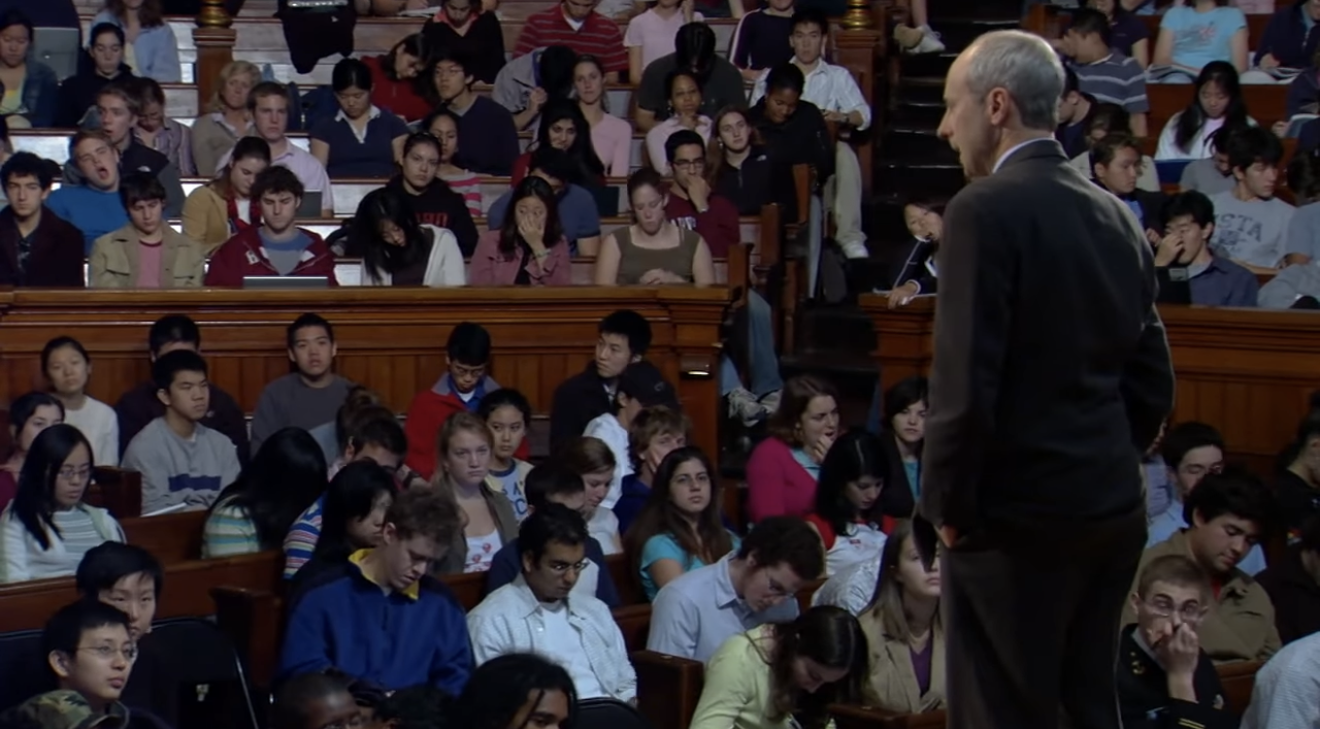
Michael Sandel’s Harvard Justice lecture on Kant uses the example of a shopkeeper who deals honestly to protect his business. The customer receives the correct change, yet the reason for the conduct differs from honesty practiced out of duty. In Sandel’s explanation, Kant distinguishes an action that agrees with duty from one motivated by duty.
It is a deliberately uncomfortable distinction. We often assess a decision by its visible outcome because that is what we can observe. Motives are less accessible, including our own. An honest-looking action may involve generosity, habit, reputation and fear all at once. The philosophical value of the example is that it prevents a successful outcome from ending the inquiry automatically.
The metaphysical question inside responsibility
Kant’s account also raises a problem about freedom. As the Stanford entry explains, he connects moral agency with a practical standpoint from which we consider ourselves capable of acting for reasons. His distinction between the world as experienced and things as they are in themselves is part of his attempt to address the tension between causal explanation and freedom. Interpretations of that attempt remain contested.
This matters because explaining why someone acted and asking whether the action was justified are different projects. A history of influences may illuminate a decision without settling what the person should have done. Conversely, blaming someone without considering their actual capacities risks making responsibility an empty demand. Metaphysics enters when we ask what sort of agency those judgments require.
The Amsterdam agenda makes the continuing interest concrete without announcing a philosophical breakthrough. Its questions invite readers to examine what they mean by knowledge, choice and obligation. Begin with an ordinary decision, state the reason you would offer another person, and ask whether that reason survives when the positions are reversed. The exercise can sharpen judgment even where disagreement remains.
More related articles to read from this panel!
Also check out our current magazine ‘The Aftermath’ Issue & other publications we’ve released below.

DOSSIER Mining releases in retrograde 'In the Land of Chromatica' with Lady Gaga's Designer Xtian de Medici, Keren Wolf, FX Pose's Naomi Cruz honoring the life of Grandfather Hector of House of Xtravaganza as our 1st cover story & Award Winning Anna Schollerova from Nora K's Whisper Naked Shadow TV mini-series and much much more!! The DOSSIER Mining compared to 'The Aftermath' issue, & others before it, is elevated reaching a better and truer essence of the Cyclolore Brand from many aspects & will so moving forward.
What exists may depend, in part, on how we ask the question. The published abstract for David Liggins’s October 26 lecture at the Aristotelian Society offers a demanding invitation: examine the language used to describe reality before deciding what belongs in it.