
Printed in Orbit: ESA’s Tiny Thrusters Face Their Next Test
Space manufacturing is entering a more demanding phase, where every layer has to survive the realities of use.
Making a metal object in orbit is a remarkable beginning. The harder question comes when that object has to do a job. ESA’s fifth metal sample printed aboard the International Space Station has returned to Earth carrying two DLR-designed experimental thrusters, the agency announced October 1. Now comes the engineering work that will determine what those small shapes can actually withstand.
The story began well before these components arrived. ESA’s printer completed its first full metal shape in August 2024. Built by an Airbus-led team, with Cranfield University contributing to the melting system and other hardware, the demonstrator joined an ISS that had already hosted plastic-printing experiments. Metal brought different possibilities for the kinds of equipment future crews might manufacture. ESA’s first-print announcement set out that longer-term ambition.
A workshop with special rules
Inside the printer, stainless-steel wire meets a small pool of metal heated by a laser. The material is deposited along a programmed path, gradually building the object. Surface tension helps hold the tiny molten pool in place in microgravity. That detail gives the process an almost delicate quality, even though it involves intense heat and a material familiar from heavy industry. ESA’s technical overview explains how the system works.
The equipment operates inside a sealed enclosure to contain heat and fumes. Before printing, nitrogen replaces the oxygen inside, helping prevent oxidation. Space makes familiar workshop precautions more complicated: a floating particle has somewhere else to go, and the surrounding laboratory is also a crew’s living environment.
That human side appears in ESA’s July video of astronaut Sophie Adenot handling the printer. She describes wearing goggles and a mask during sample retrieval. The footage shows an earlier, fourth sample, so it provides background on operating the equipment rather than documentation of the newly returned thrusters. Her observation that the machine’s mass remains substantial in weightlessness is a useful reminder: orbit changes how equipment behaves without making it effortless to handle.
Why Earth still gets the final say
Earlier samples have already undergone close examination at ESTEC, ESA’s technical centre in the Netherlands. Researchers inspected surfaces under a microscope, used CT scans to look for internal pores and subjected prepared specimens to stretching or bending. Comparing a space-made sample with a matching Earth-made one helps isolate the effects of the manufacturing environment. ESA detailed that testing programme in November 2025.
For the thrusters, DLR plans hot-fire tests at Lampoldshausen, Germany, and comparisons with terrestrial equivalents. One version was printed close to its intended final shape; the other has thicker walls for subsequent machining. Those tests are described as forthcoming in ESA’s October update. Successful propulsion performance has yet to be reported there.
The attraction is easy to understand. On longer journeys, the ability to make a tool or replacement part could give astronauts more independence from resupply, a goal outlined in ESA’s programme announcement. For that future to become dependable, engineers need evidence they can repeat and trust. A finished print is something to celebrate. Learning how it behaves under stress is what could make it useful.
Background footage: Sophie Adenot retrieves the fourth sample and prepares the printer for another session. ESA, July 2, 2026. Footage: ESA/NASA.
Related Stories to read next from this featured panel!
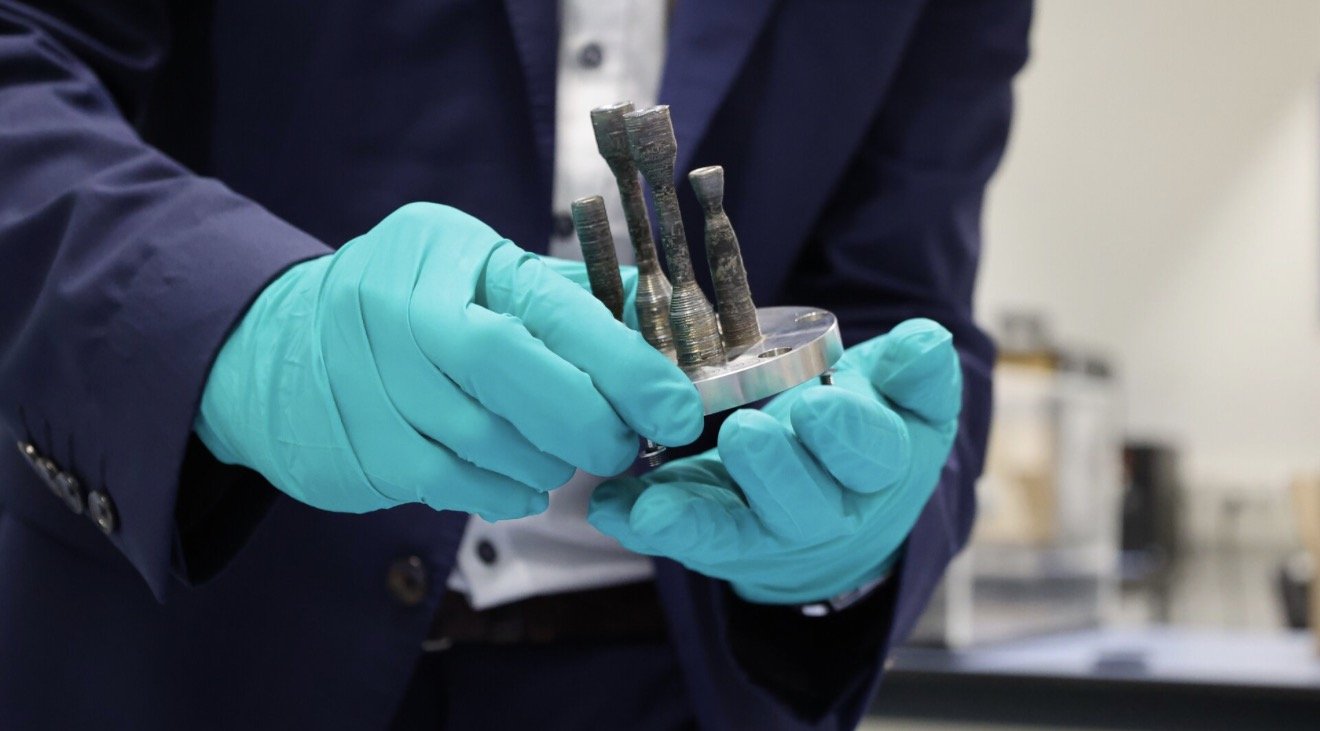
Making a metal object in orbit is a remarkable beginning. The harder question comes when that object has to do a job. ESA’s fifth metal sample printed aboard the International Space Station has returned to Earth carrying two DLR-designed experimental thrusters, the agency announced October 1. Now comes the engineering work that will determine what those small shapes can actually withstand.

This scenario is the most recent in a string of incidents in which American officials claim that drones and missiles fired by Houthi rebels in Yemen, who are aligned with Iran, have collided with destroyers in the Middle East. It also coincides with the spate of attacks against American personnel in Syria and Iraq in recent weeks due to the Israel-Hamas conflict.

It's just food for thought but what if the Apple iPhone 12 gives elemental incentive for other devices like tablets, e-readers, etc. to malfunction or crash indefinitely, hmmm makes me wonder.

The Sony A7 IV is the exceptionally foreseen replacement to the all-purpose Sony A7 III, which was delivered in 2018 yet stays a famous and competent camera.

The mechanical canine, named Spot by maker Boston Dynamics, got the attention of @bloodtear with his weird walk down a sidewalk in northern Ontario, Canada.

PlayStation Plus members will gain admittance to Sledgehammer Games' Call of Duty: WWII as a component of their membership, beginning on May 26.


When Apple at long last unveils its new iPhone 12 models in the not so distant future, we're almost certain they've going to look precisely like what you're going to find in the YouTube video loaded into this article.

Apple and Google shared a considerable lot about their COVID-19 contact detection plans with their joint declaration, however they despite everything left a few holes. Be that as it may, Apple has been happy to fill in a couple of the blank spots in a catch up with press sources.

Bag Valve Mask (BVM) ventilation is a basic crisis expertise, being proposed by New York City Government Andrew Cuomo March 28th, 2020 as a last resort should the Healthcare disaster reach an apex point.

In any case, as numbers climb, human services laborers and state pioneers have sounded the caution on clinical supplies starting to run low. In New York City, presently the focal point of the outbreak in the US, Mayor Bill de Blasio approached Trump for help and said supplies may just keep going for the following hardly any weeks.

"The health and well-being of every person who helps make these products possible is our paramount priority, and we are working in close consultation with our suppliers and public health experts as this ramp continues," the organization said.

The most recent TVs are as a rule outfitted with worked in receivers and cameras, which enable clients to convey directions to the TV or by utilizing facial acknowledgment. With these new capabilities, in that lies the peril for customers and an open door for programmers.

The Air Force is firing up generation of the air-dropped, exactness guided BLU-129 bomb progressively sought after by combat area authorities - so precise, deadly and exact, it is classified “the world’s largest sniper accuracy.”

Apple, the organization that made the present day cell phone, is depending on innovation because clients are as of now very acquainted with, similar to cameras, and assuming a lower priority with regards to cell phone advancement. Be that as it may, could the organization's commitment to well-known innovation be an advantage to the iPhone lineup?

When Facebook first declared it was getting into the crypto business—with an essentially unregulated money called Libra—the response from Wall Street and government investors was about true to form. There was doubt and pushback from the two quarters.

The U.S. national guard spending plan is one of the most enlarged on the planet, with financing surpassing $1 trillion as the Pentagon and barrier industry-accommodating lawmakers look to verify the unchallenged strength of the U.S. Military over the globe.
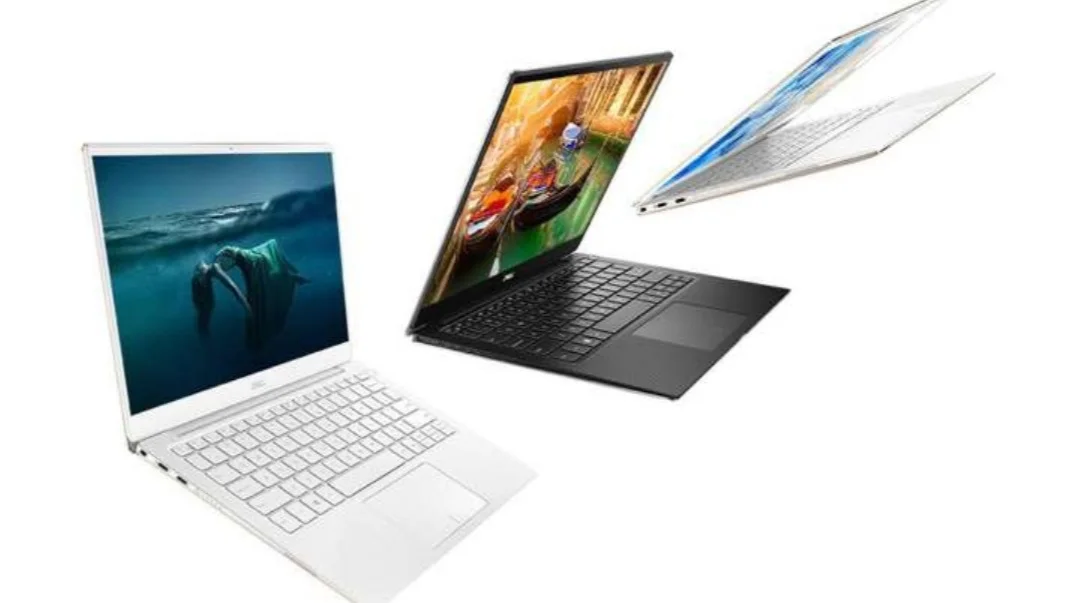
In front of IFA 2019 in August, Dell declared an invigorate of its XPS 13 workstation with Intel's tenth Gen Core processors — and now the Intel Core i7 model with six centers is accessible for consumers beginning at $999. With those six centers, you can probably hope to see better execution while performing various tasks, however applications should be upgraded to exploit the extra handling force.

To provide more context around Zuckerberg’s remarks, close source The Verge has gracefully published expanded transcripts from the two meetings below. In them, Zuckerberg discussed his plan to beat TikTok, why he wants to keep absolute control of the company, and what employees should tell friends who have a dim view of Facebook. Each question below was asked by a different Facebook employee.

A conceivably tenable 'super-Earth' has been found only 31 light-years from our nearby planetary group, cosmologists reported Wednesday. The planet, named GJ 357 d, is around multiple times bigger than Earth and circles a diminutive person sun GJ 357, a lot littler than our own, each 55.7 days. The global group of stargazers that found the planet said in a news discharge that it could "provide Earth-like conditions."


“Given the growing federal, state and local regulatory complexity and uncertainty regarding e-cigarettes, we plan to discontinue the sale of electronic nicotine delivery products at all Walmart and Sam’s Club U.S. locations,” says the announcement. “We will complete our exit after selling through current inventory.”

China has undoubtedly progressed toward the complete dominator as the most technologically advanced country in regards to Artificial Intelligence and it’s cutting edge systems. China’s President Xin Jingping is goaling for China to be the world’s leader in AI technology by 2030. On one end the country is putting in astronomical efforts through this AI system to boost its economy though NBC News reports that the technology was developed in the United States, “China is grappling with a slowdown that will see output growth slide to the weakest pace in almost three decades this year, as factors far beyond the trade war with the U.S. weigh on the world’s second-largest economy,” according to Bloomberg. China is also sparing no expense using their AI advancement to crack down on citizens and crack down as in below ground-level as it’s connecting to the “Concentration Camps” or “Death Camps” in which Xinjiang is known for.
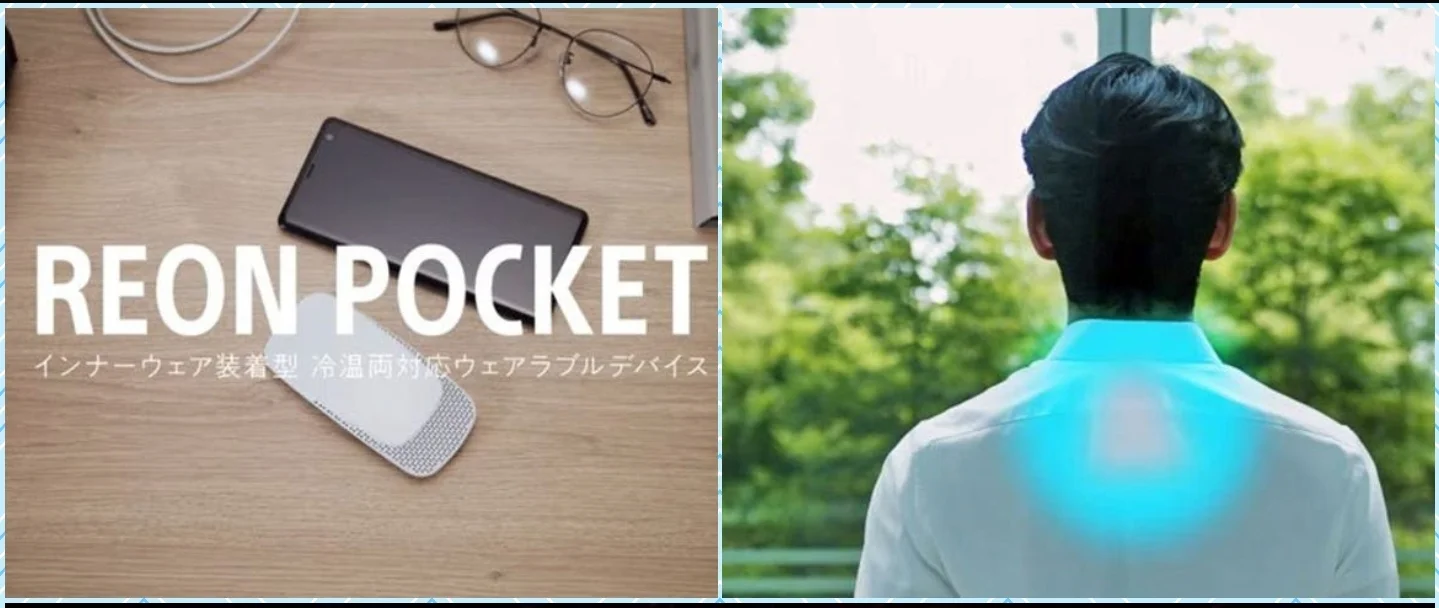
Sony's First Flight crowdfunding stage has uncovered its most up to date task to help individuals beat the warmth throughout the late spring. The Reon Pocket is a compact gadget about the size of a card wallet, which fits snuggly into the back of a custom undershirt. Utilizing thermoelectric cooling, the item can be controlled by means of Bluetooth on a cell phone and either chill off or warm up, contingent upon the client's inclination.
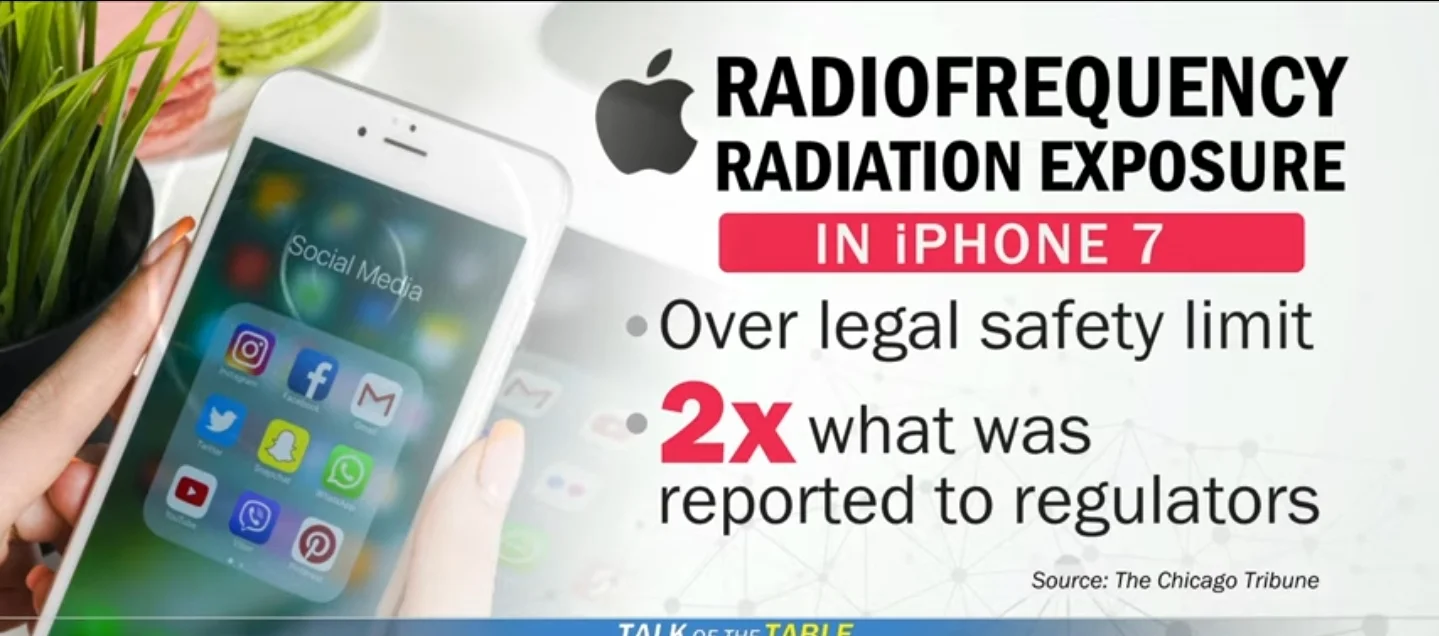
An examination concerning the radiofrequency radiation levels yield by prevalent cell phones, and found that a portion of Apple's iPhones are supposedly producing radiofrequency radiation that surpasses wellbeing limits. As indicated by the paper, it gotten a certify lab to test a few cell phones as indicated by government rules. iPhones were verified beneath clear fluid planned to reenact human tissue while tests estimated the radiofrequency radiation the fluid assimilated.
Also check out our current Publication “The Aftermath ” Issue available now!

DOSSIER Mining releases in retrograde 'In the Land of Chromatica' with Lady Gaga's Designer Xtian de Medici, Keren Wolf, FX Pose's Naomi Cruz honoring the life of Grandfather Hector of House of Xtravaganza as our 1st cover story & Award Winning Anna Schollerova from Nora K's Whisper Naked Shadow TV mini-series and much much more!! The DOSSIER Mining compared to 'The Aftermath' issue, & others before it, is elevated reaching a better and truer essence of the Cyclolore Brand from many aspects & will so moving forward.
Francis Halzen has won the 2026 Nobel Prize in Physics for his contributions to IceCube and its discovery of high-energy neutrinos from beyond our solar system. Announced on October 6, the award honors a vision that turned a cubic kilometer of Antarctic ice into a telescope and opened a new way to study the universe.