
Navi Pillay Wins the 2026 Nobel Peace Prize
The South African jurist is honored for advancing peace and international law, with a career spanning anti-apartheid advocacy and landmark international judgments.
Navanethem “Navi” Pillay has won the 2026 Nobel Peace Prize for her work advancing peace and international law. Announced on October 9, the award recognizes a South African jurist whose career connects the struggle against apartheid with the development of international justice.
The Norwegian Nobel Committee’s explanation places legal institutions at the center of its decision. It credits Pillay with helping bring war crimes, crimes against humanity and genocide within reach of prosecution, while warning that international law and the institutions responsible for upholding it face intense pressure. The choice makes a public argument about how peace is built: through accountability, enforceable principles and the people prepared to defend them.
From apartheid South Africa to international courts
Pillay’s early work gives that argument a personal history. An archival United Nations biography describes her legal defense of anti-apartheid campaigners and trade unionists, alongside her work on women’s rights and the rights of detainees and torture survivors. It records that she established a law practice in Natal in 1967. Those experiences preceded her international appointments and grounded her work in the practical consequences of discrimination and state power.
The Nobel Committee’s laureate profile traces her upbringing in a Durban family of Indian Tamil descent and her later legal studies at Harvard. She went on to serve as United Nations High Commissioner for Human Rights from 2008 to 2014. Her career encompasses advocacy, judging and institutional leadership, roles with different responsibilities but a shared concern with how rights are protected when they are contested.
Archive: Navi Pillay’s Human Rights Day message, published by UN Human Rights on November 24, 2009. This earlier statement provides context for her human-rights work; it is not footage of the 2026 Nobel announcement.
A judgment that changed the legal record
One landmark can be examined in the court’s own record. On September 2, 1998, Pillay was one of three judges who convicted former Rwandan mayor Jean-Paul Akayesu of genocide and crimes against humanity. The International Criminal Tribunal for Rwanda’s account identifies it as the first genocide judgment by an international court. It also explains the finding that rape and sexual violence could constitute genocide when committed with the intent to destroy a targeted group.
The same record shows the specificity that legal accountability demands: the judges found Akayesu guilty on nine counts and not guilty on six. For a wider cultural audience, that detail is worth retaining. Court judgments are built from individual charges, testimony and standards of proof. Remembering those processes helps explain how an institution establishes a record, and why the voices and experiences admitted into that record matter.
Recognition amid continuing disputes
Associated Press reports that Pillay’s more recent work included chairing a commission that concluded Israel had committed genocide in Gaza, a finding Israel denies. Under her leadership, the commission also reported alleged war crimes by Hamas during the October 7, 2023 attacks. These are the commission’s findings, and the Nobel award should not be read as a separate court ruling on them. AP reports that Pillay received the prize news while attending a forum in Nuremberg.
In South Africa, Parliament’s International Relations and Cooperation Committee welcomed the award, linking Pillay’s career to the protection of human dignity and peaceful conflict resolution. Its statement emphasized both her work under apartheid and her subsequent international service, presenting the recognition as a source of national pride.
The significance of this year’s choice lies in that connection between a life’s work and the institutions it helped shape. A Nobel announcement can bring those institutions into public view; their effectiveness remains something to examine through particular cases and decisions. Pillay’s award offers a reason to return to that history, including the patient legal work that gives broad promises of human dignity a place in the record.
Also check out Cyclolore Magazine’s new DOSSIER Mining Issue & other publications we’ve released below!

DOSSIER Mining releases in retrograde 'In the Land of Chromatica' with Lady Gaga's Designer Xtian de Medici, Keren Wolf, FX Pose's Naomi Cruz honoring the life of Grandfather Hector of House of Xtravaganza as our 1st cover story & Award Winning Anna Schollerova from Nora K's Whisper Naked Shadow TV mini-series and much much more!! The DOSSIER Mining compared to 'The Aftermath' issue, & others before it, is elevated reaching a better and truer essence of the Cyclolore Brand from many aspects & will so moving forward.
Related Stories to read next from this featured panel!

Authorities have arrested Angel Carrasco in connection with the death of Nathaly Ramirez, a 23-year-old Bronx mother who fell from a 15th-floor balcony while holding her infant daughter. The child survived and remained hospitalized Thursday, October 8.
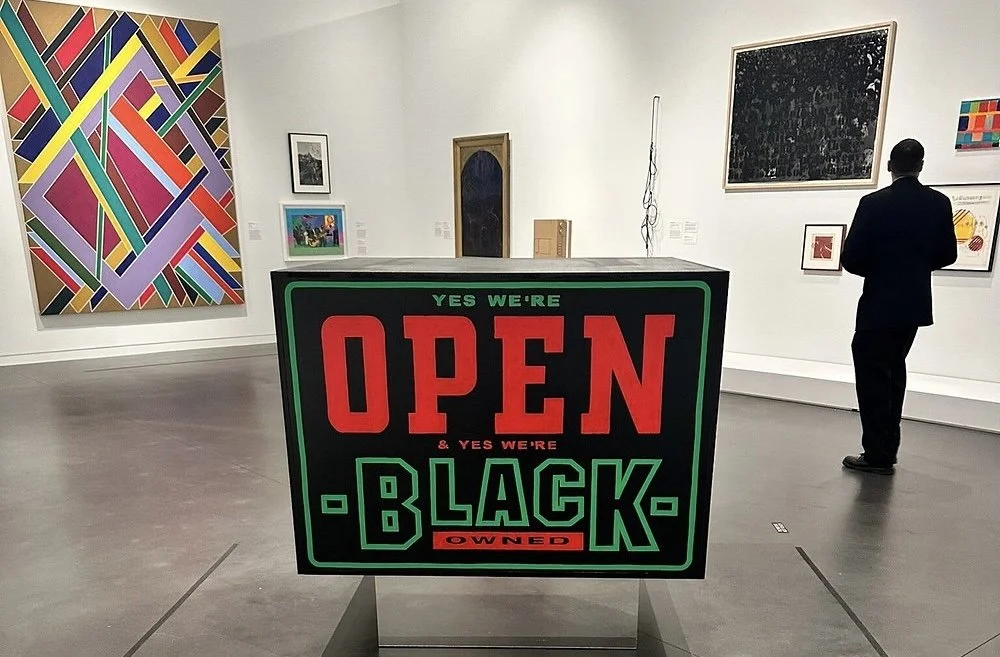
The Studio Museum in Harlem has fresh room for becoming. Opened October 1, A sustained becoming brings together Derriann Pharr, Simonette Quamina, and Taylor Simmons, the first artists in residence in its new building. Their different approaches to the figure give the institution’s next chapter a human scale.
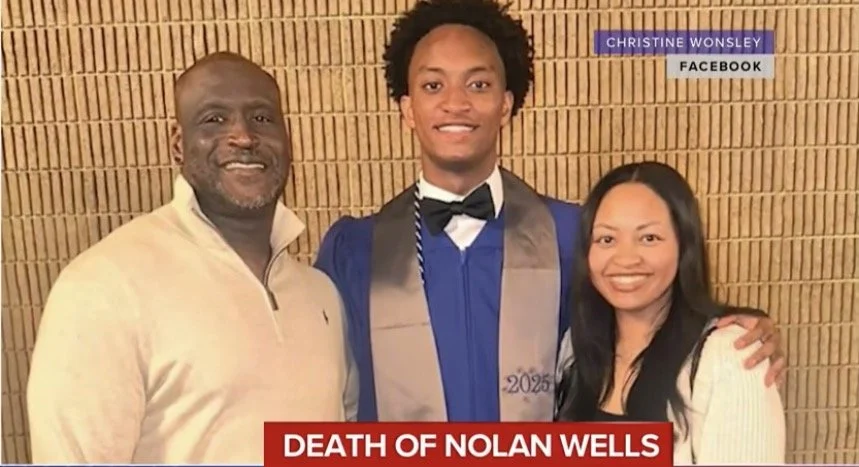
Nolan Wells’ family is renewing its push for a federal investigation after a Mississippi grand jury declined to indict anyone in his death. At an October 5 news conference in Inglewood, California, his parents and attorney Ben Crump called for another examination of the case that has drawn months of public scrutiny.

Ross is shown in front of Good's car at the start of the video. Good had stopped her burgundy SUV perpendicular to the street, blocking traffic. Ross crosses the front of the car and moves near the driver's side without saying anything.

The murder represents a brutal period in contemporary history and is the most recent horrifying instance of political violence depleting American morale. It comes after Trump was the target of two assassination attempts in 2024; Melissa Hortman, a popular Democratic lawmaker from Minnesota, and her husband were killed last year; a health insurance executive was allegedly killed on a New York street in 2024; and MAGA hero Charlie Kirk was brutally shot and killed in September.
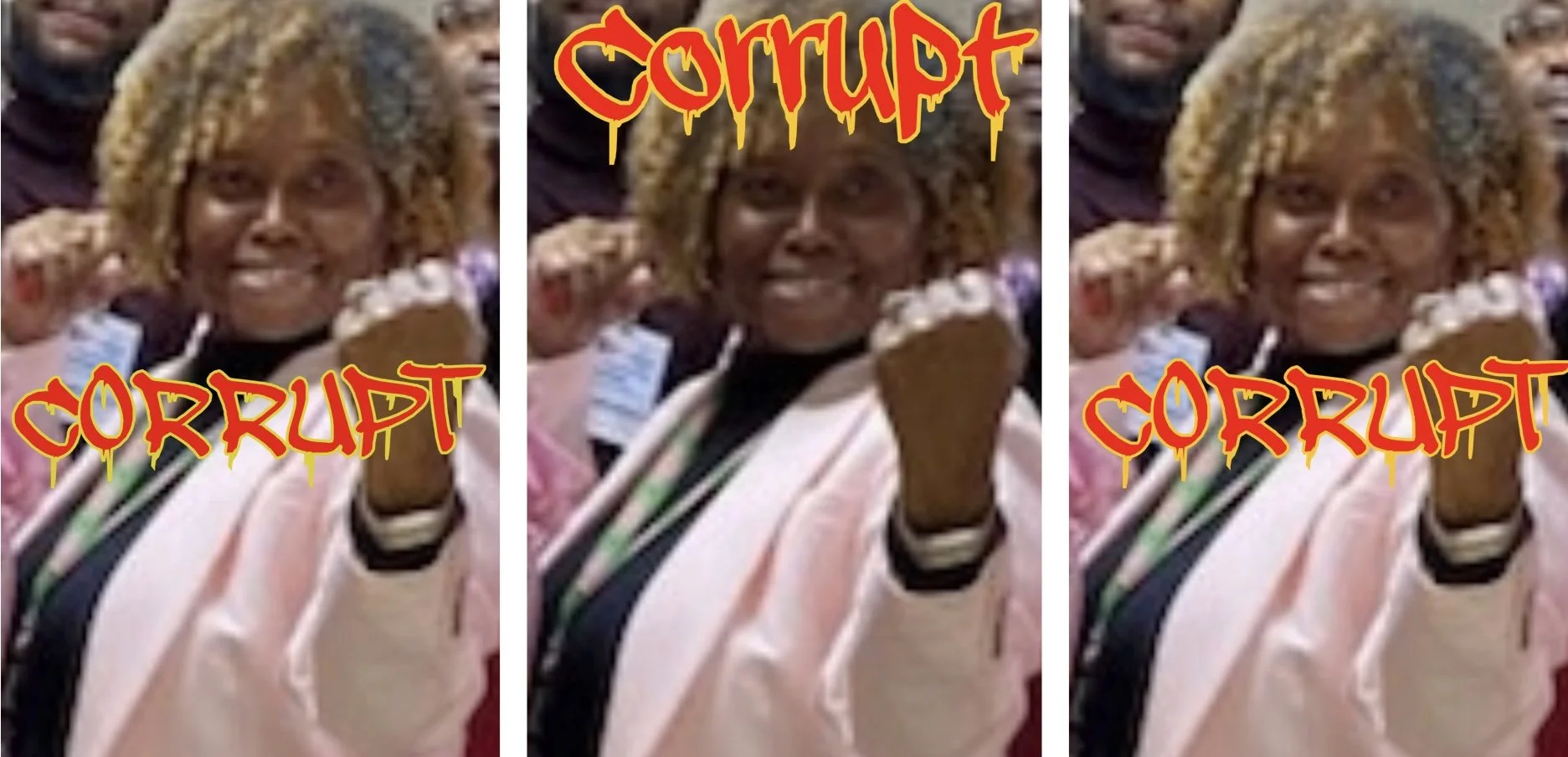
My coat was banned by manager Terri Butler saying that I couldn't wear it walking around the hospital on the floor where the heater didn't work and on a morning when it was 49° all with her even being told that patients were even complaining about the cold and the seats being too cold, asking for cushions to sit on. The coat was actually casual, professional and meant to keep you warm, the coat was not distasteful or anything. It was Autumn colored plaid & insulated. The manager Terri explained the heater on the 4th floor doesn't actually work and that the place is a work in progress. I never was informed of my 30 day review like my co-worker was able to be participatory for her 30 day review. This would have been a fair interval of time to meet with me and advise of any leading termination thoughts on any "challenges" Ms. Terri Butler reasoned for the separation of my occupation at Brookdale Hospital as a Credit Interviewer.

"America has opened the door to hell for itself," the official Houthi news agency published an editorial on Monday, threatening retaliation for US Navy attacks on their boats in the Red Sea and alleging that the US is aiding Israel in its heavy bombardment of Gaza by preventing them from enforcing their ban on Israel-linked ships passing through the Red Sea.

The announcement of the release coincides with rising anticipation for a ground invasion that Israel claims is intended to drive out militants from Hamas, which controls the Gaza Strip. Israel stated on Friday that it had no intention of assuming long-term authority of the little region, which is home to some 2.3 million people.

His business partner, the radio host DJ Envy, who assisted in promoting the real estate endeavor, is also under investigation. Federal agents visited the iHeartRadio office where Envy works and took electronic devices as part of the inquiry, according to NBC 4.

1+ Year start-up, as Intake Specialist, you work in a 2 rm. Basement & defective computer equipment. 1 small bathroom for everyone in condensed space shared with field nurses as well when they come in to replenish their field equipment. Underpaid for strenuous duties, chaotic flow & training, early but growing stage of development.

According to Bob Savage, head of markets, strategy, and analytics at BNY Mellon, "the USD is unlikely to lose its global reserve status anytime soon - new currency unions should look to technology or green baskets, rather than gold- or carbon-based ones."

“At the time, we did not have the luxury of all the videos that we have seen now, that you and I have seen, and that the world has seen. Basically all we had were witness statements and he-said, she-said so our police officers and detectives had to decipher through all that and then apply the appropriate charges at that time,” Albert unpacked.

The Wuhan COVID Virus nightmare is continuing to shock us again and again as videos emerge from the country showing the weight of the tragedy in China. The first video shows what looks like a parking lot with dead bodies aligned everywhere the camera pans. The scary resemblance of when the virus first erupted in China back in 2019-2020, only now its worse with a cocktail of variants circulating.

NATO said that training flights will take place over Belgium, which is hosting Steadfast Noon this year, as well as over the North Sea and the United Kingdom. The exercises involve fighter jets capable of carrying nuclear warheads, but do not involve any live bombs.

In Lowndes County, the Justice Department is researching whether neighborhood and state authorities are working in a way that victimizes Black inhabitants.

“My stomach hurts, I’m very pale and I have huge black circles around my eyes. I want all this to end. I cry every day. I’m very tired,” she composed, per the Associated Press, guaranteeing a similar supper was served for breakfast, lunch and supper for five days.

The event ranged from politicians like NY Senator Brian Benjamin to entertainment by multiple dance teams including the Net's Team Hype, performers who sang their heart out in the soul of downtown Brooklyn to even an incredible and crowd rousing host Angela Yee from The Breakfast Club.

The entertainer's mom, Carolyn Boseman, "always taught him not to have people fuss over him," the specialist, Michael Greene, said. "He also felt in this business that people trip out about things, and he was a very, very private person."

Rapper Nicki Minaj's dad passed on subsequent to being struck by a vehicle in a quick in and out accident in New York on Friday night.

The decorated media outlet VICE News has acquired and surveyed a ton of the proof that was accessible to Attorney General Daniel Cameron in the Breonna Taylor case.

"CBS This Morning" co-have Gayle King plunked down with Walker and his lawyers, Steven Romines and Frederick Moore, to elucidate on the proof of the case, the amazing jury not charging Louisville cops in Breonna Taylor's passing, and Walker's forthcoming claim asserting police unfortunate behavior.

The compound that gives cannabis its psyche changing impact - could help forestall an unsafe insusceptible reaction that causes Acute Respiratory Distress Syndrome (ARDS). ARDS is one of the most well-known complexities for patients with serious cases of coronavirus. It very well may be deadly or lead to lasting aspiratory scarring.

“A racially diverse group of students were involved in an incident involving a false report. The students will be held accountable for this at every possible level.”

One of America's most established and most popular significant distributions devoted to Black ladies perusers has furloughed some staff. In a press release on Tuesday, Essence said it had been compelled to leave staff because of income misfortunes because of the Covid pandemic, which drove the distribution to drop significant occasions, for example, the ESSENCE Festival of Culture.

Dissimilar to the Amazon organization's other surveillance cameras, the Always Home Cam is a flying camera drone that docks when it isn't being used. The Ring Always Home Cam will be accessible in 2021 for $250.

The entertainer's mom, Carolyn Boseman, "always taught him not to have people fuss over him," the specialist, Michael Greene, said. "He also felt in this business that people trip out about things, and he was a very, very private person."

In the video below Tasha K explains some very intricate details about Wendy Williams and her relationship with DJ booth and her staff also noting that she wanted to put a boost behind getting this on her platform before Daily News.

As per reports, an official with the Louisville Metro Police Department was taken shots at roughly 8:30 PM neighborhood time during the night's dissent in the wake of the Breonna Taylor choice.
Navanethem “Navi” Pillay has won the 2026 Nobel Peace Prize for her work advancing peace and international law. Announced on October 9, the award recognizes a South African jurist whose career connects the struggle against apartheid with the development of international justice.